Life & Health
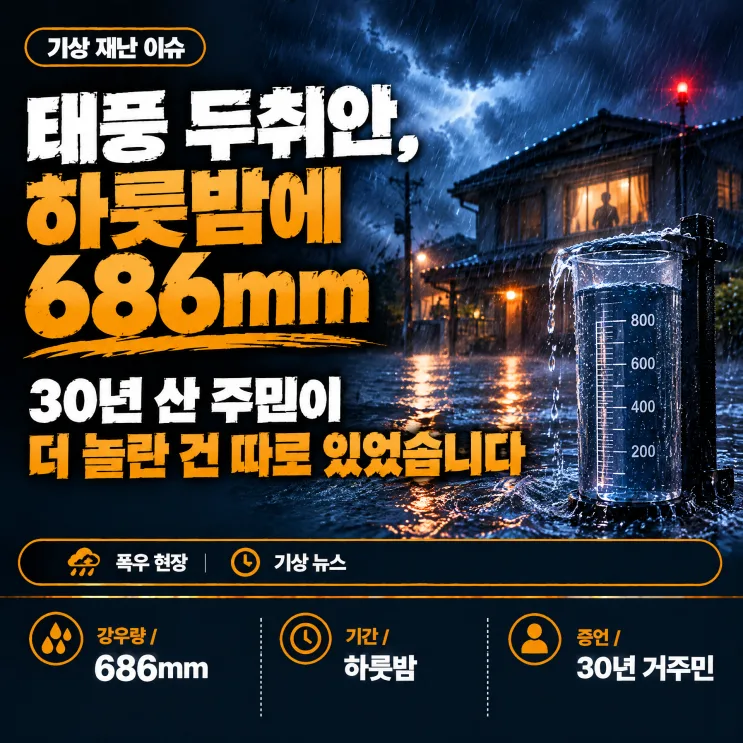
In the place that saw 686mm of rain in a single night, what shocked even a 30-year resident most was something else entirely.
September 22, 2026 | About 4 min read | Daegu
|
Key takeaway: As Typhoon Dujuan tore through the Greater Tokyo area in Japan, it dumped a record 686.5mm of rain in 24 hours. As of September 22, 4 people have died and 6 remain missing. |
1. A month’s worth of rain in one day—actually, nearly double
Since last night, I’ve been constantly refreshing Japanese news coverage.
Forecasts had been warning for days that the typhoon was tracking toward Tokyo.
But it wasn’t until I saw the actual numbers that the scale of this disaster really sank in.
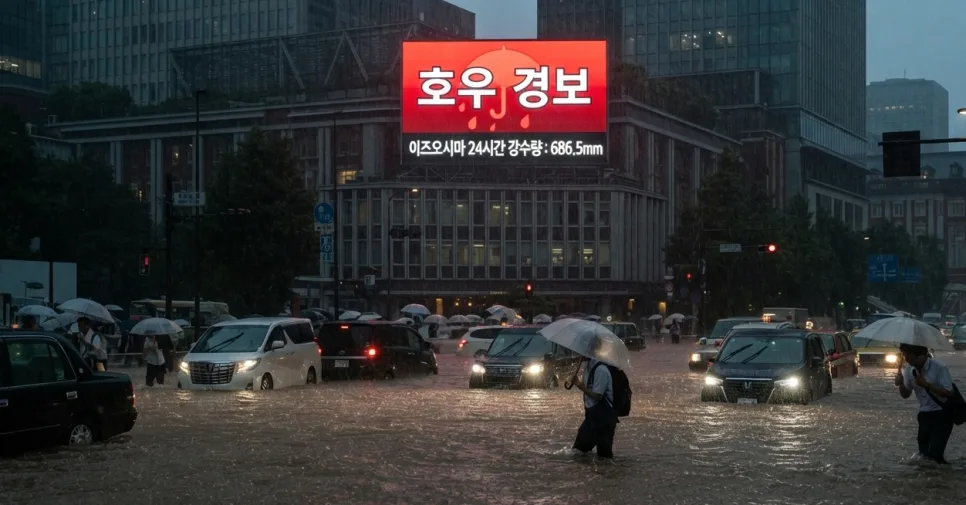
On September 21, when Typhoon Dujuan passed through, Izu Oshima recorded 686.5mm of rain in 24 hours.
The average rainfall there for the entire month of September is 341.3mm.
In other words, nearly twice a full month’s rain fell in just one day.
It wasn’t just one area, either.
Ichihara in Chiba Prefecture saw 392.5mm, Funabashi 345.5mm, Miura in Kanagawa Prefecture 308.0mm, and Edogawa in Tokyo 282.5mm.
Every one of those totals was the highest ever recorded at those observation points.
Peak gusts reportedly reached 194 km/h, making it a night of punishing rain and violent wind at the same time.
2. The damage started on hillsides, not just along rivers
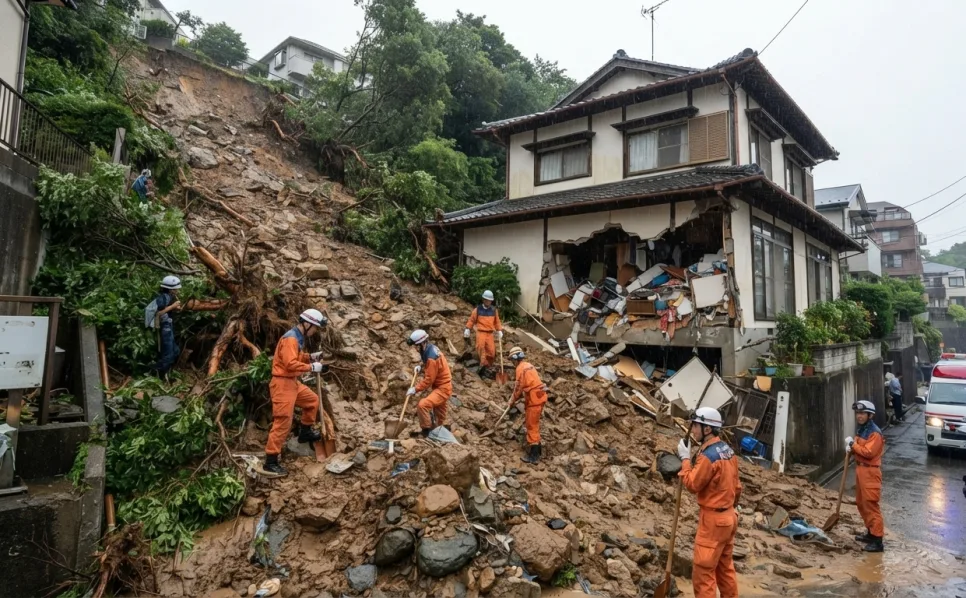
According to local reports including NHK on September 22, the death toll stands at 4, with 6 people still missing.
The victims were reportedly in their 50s to 80s.
In Yokosuka, Kanagawa Prefecture, a woman in her 60s was killed when mud and debris surged into her home.
The hardest-hit areas were Chiba and Kanagawa prefectures.
Roads were flooded in Kamakura, and inundation reports kept coming in from Ichikawa and Oamishirasato as well.
One quote from a Chiba resident in the news has really stayed with me.
“A nearby river swelled and flooded our house. In more than 30 years of living here, I’ve never seen damage like this.”
What makes that even more unsettling is that Chiba Prefecture was hit by major flooding just last month.
At the time, more than 10,000 vehicles were reportedly submerged.
Before recovery was even finished, the water came back again.
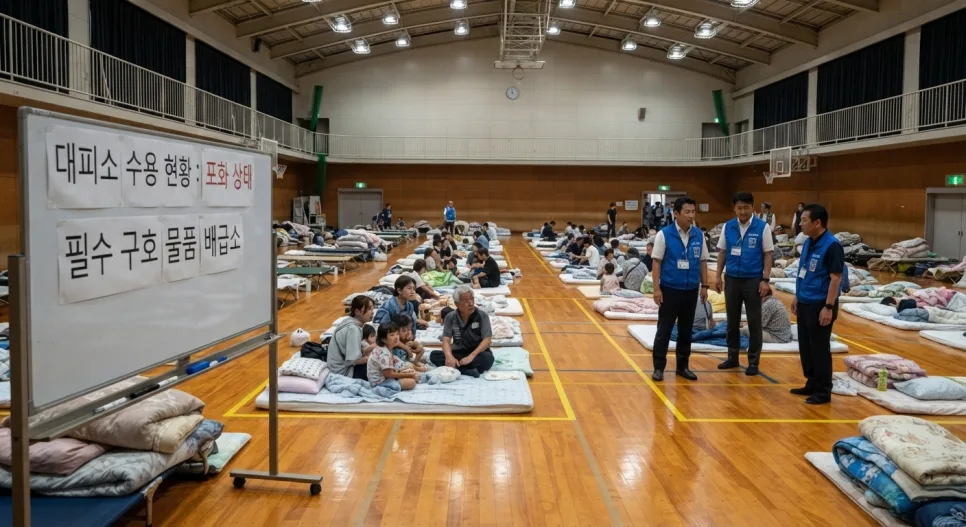
3. Evacuation advisories issued for 2 million people
Japanese authorities issued evacuation information for six prefectures: Tokyo, Chiba, Kanagawa, Shizuoka, Saitama, and Ibaraki.
The number of people affected is estimated at around 2 million.
The reason was clear: the risks of landslides and river flooding were rising at the same time.
Power outages were also widespread.
As of the morning of the 22nd, about 49,080 households across four prefectures had lost electricity, and in Kanagawa Prefecture alone, roughly 45,000 households were still without power around 2:30 p.m.
Since the outages hit during the worst of the wind and rain, the fear on the ground must have felt even more intense.
The Japan Meteorological Agency had warned of “torrential rain exceeding the average monthly rainfall in a short period,” and that warning became reality almost exactly as described.
What lingers with me is that even when the forecast was right, it still wasn’t enough to prevent the damage.
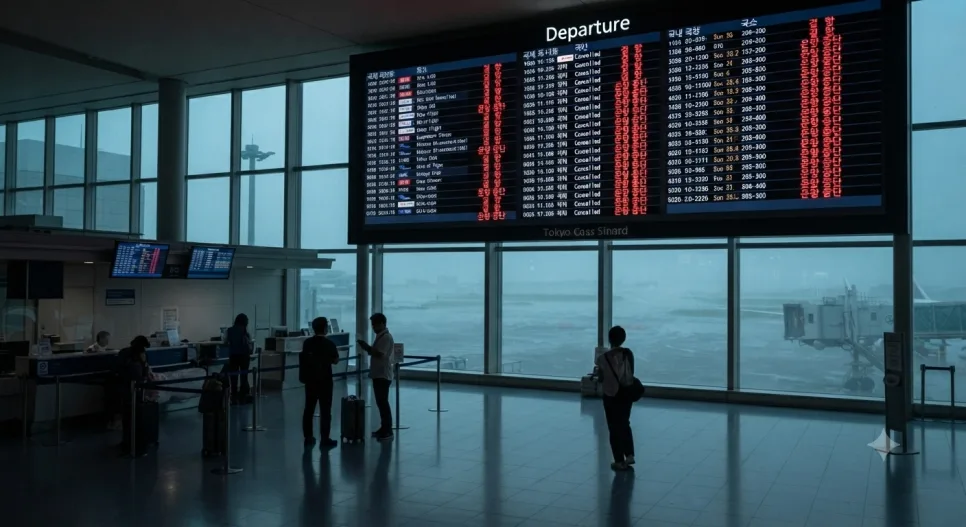
4. Airports, Shinkansen, and even Tokyo Game Show came to a stop
Transportation was effectively paralyzed.
Japan Airlines (JAL) canceled 135 flights, while All Nippon Airways (ANA) canceled 140.
The Narita Express to Narita Airport was fully suspended, and both the Narita Line and Uchibo Line also stopped running.
Service was also suspended on parts of the Shinkansen route connecting Tokyo and Osaka.
Event cancellations followed one after another.
Tokyo Game Show, which was being held in Makuhari, Chiba, ended early, and a major outdoor music festival scheduled in Chiba was canceled outright.
A professional baseball game scheduled for the same day also could not be played.
Prime Minister Sanae Takaichi’s departure for the UN General Assembly was delayed by about four hours as well.
It was the kind of day when the entire Greater Tokyo area seemed to grind to a halt.
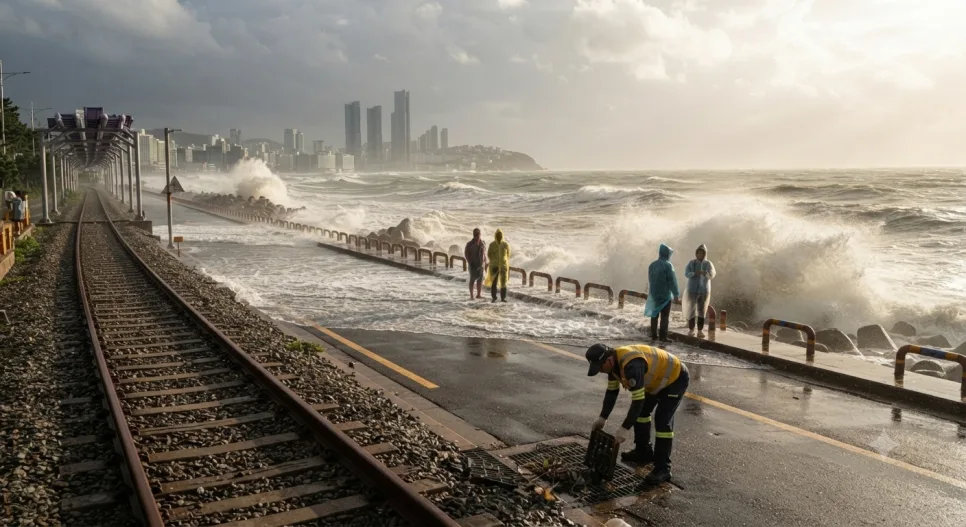
5. Why this is hard to dismiss as just another country’s problem
Dujuan is the 25th typhoon to form in the northwestern Pacific this year.
Experts say higher-than-average sea surface temperatures may have been one factor that strengthened the storm.
The fact that a typhoon this powerful moved north this late in September already feels like a sign that this year is not following the usual pattern.
If you’re planning a trip to Japan right now, it’s a good idea to keep checking flight and rail updates until the very last minute before departure.
Because cancellations and service suspensions are being lifted gradually, heavy congestion could continue for another day or two.
I’d also strongly recommend reviewing your hotel and airfare cancellation policies in advance.
And honestly, this isn’t something the Korean Peninsula can afford to ignore either.
Fall typhoons often shift course unexpectedly, and it doesn’t take much for them to turn toward Korea.
Basic preparation—like checking drainage around your home and confirming emergency contact plans—is worth doing now, not later.
My thoughts are with everyone affected, and I truly hope the families of those still missing receive good news soon.
If you found this helpful, please share it and follow along for more updates.
|
#typhoondujuan #dujuan #japantyphoon #tokyotyphoon #chibaflooding #japanmeteorologicalagency #sanaetakaichi #recordrainfall #24hourrainfall #landslide #riverflooding #naturaldisaster #disasterpreparedness #climatechange #japantravelalert #sadnews #staysafe #evacuationadvisory #disasterwarning #specialwarning #september2026 #japantravel #naritaairport #shinkansensuspension #flightcancellations #greatertokyoflooding #disasterprevention #Typhoon #Dujuan #JapanTyphoon |
Leave a Reply