Life & News
Fu Bao Update: First Public Sighting in 4 Months as $30 Million Panda Debate Heats Up
September 16, 2026 | About 5 min read | Daegu, South Korea
|
Key takeaway: South Korea and China are actively discussing an additional panda loan, but there has never been a single case of a returned panda being sent overseas again. |
1. The video of her trembling while eating bamboo shoots
It was December 3, 2024.
One short video posted on Weibo left fans stunned.
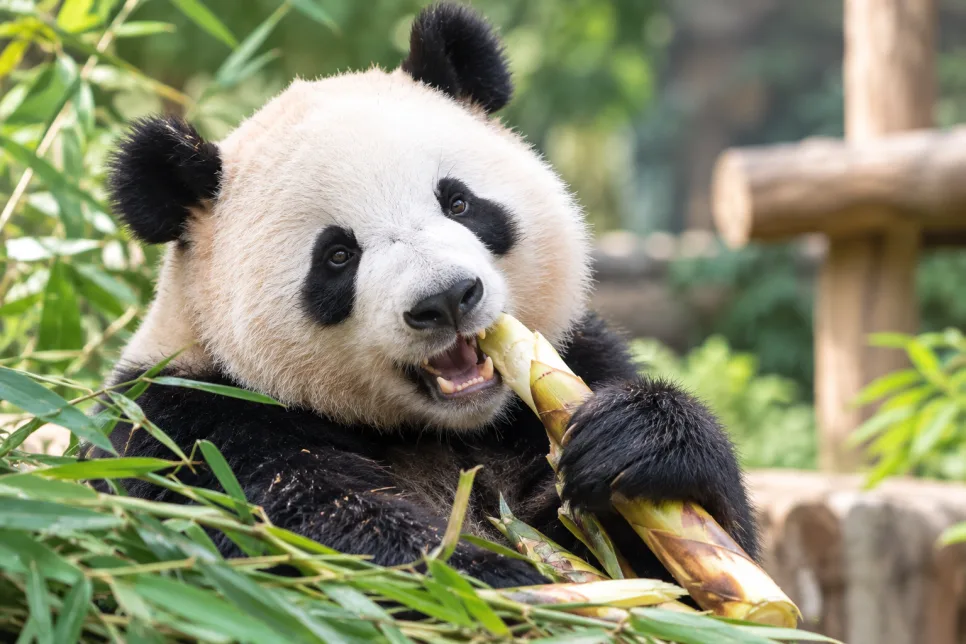
In the clip, Fu Bao appeared to tremble violently—almost like she was having convulsions—while eating bamboo shoots.
After that day, Fu Bao was immediately placed in isolation.
The China Conservation and Research Center for the Giant Panda never publicly disclosed a specific diagnosis.
It wasn’t until March 25, 2025—about 113 days later, nearly four months—that footage of her walking outside was finally released.
China Central Television (CCTV) reported that her mental state, eating habits, and activity levels had all returned to normal.
Officials said she had received customized treatment, special care during estrus, and sterilization and disinfection of her living area.
Even so, public concern didn’t fade easily, and many people continued to say her health management needed to be handled more carefully.
2. How is Fu Bao doing now?
Fu Bao first set foot in China on April 3, 2024.
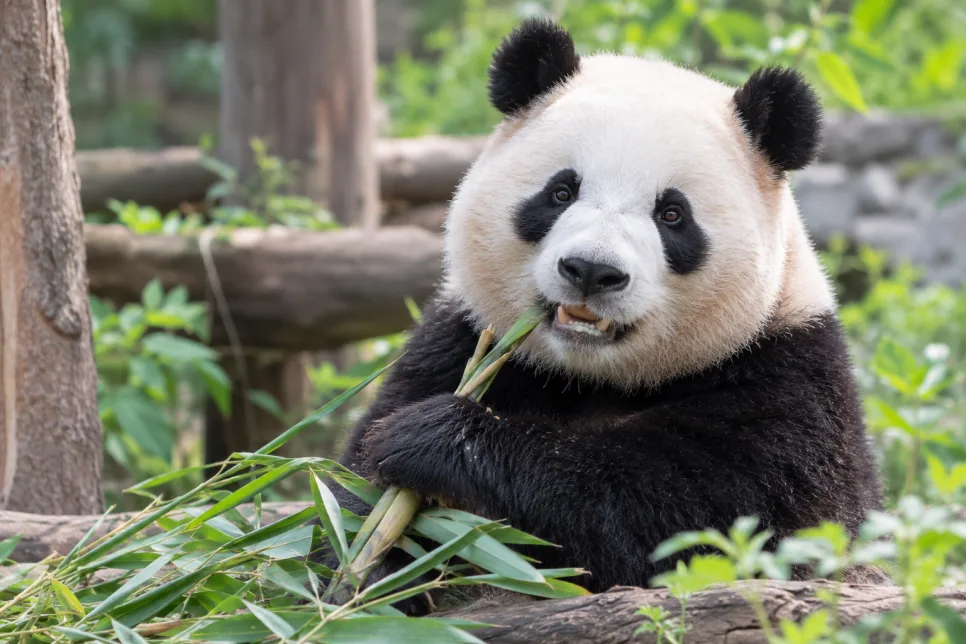
She is currently staying at the Shenshuping Base of the Wolong Giant Panda Center in Sichuan, China.
It’s an area where tourists are not allowed to get close.
According to updates shared locally in June 2026, her weight has remained steady at around 120 kilograms.
Staff also explained that the yellowing of her teeth was not tooth decay, but a normal change.
Overall, the assessment was that her condition is relatively stable.
Still, one detail continues to raise questions.
Fu Bao was not included in the 2026 breeding plan.
The base only said that she would spend this year resting and staying stable, without breeding.
That one short statement has continued to fuel a wide range of interpretations.
3. How far have the panda loan talks actually gone?
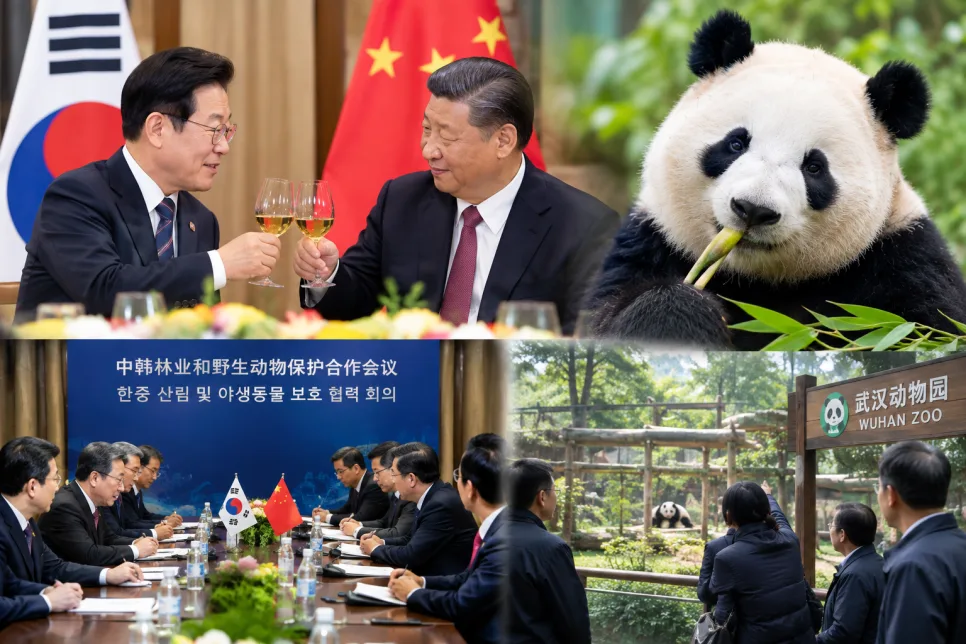
The setting was the dinner banquet during the South Korea-China summit on January 5, 2026.
President Lee Jae-myung asked President Xi Jinping to loan a pair of pandas to Gwangju Uchi Zoo in Gwangju, South Korea.
Xi’s response was this:
“I hope many Koreans will come to China to see Fu Bao.”
The very next day, January 6, working-level talks began in Beijing.
South Korean Climate, Energy and Environment Minister Kim Sung-hwan met with Liu Guohong, head of China’s National Forestry and Grassland Administration.
Both sides said they reviewed the results of past panda cooperation and agreed to deepen that cooperation.
On April 3, a foreign affairs official also visited Uchi Zoo in person to inspect the site.
In other words, this wasn’t just symbolic talk.
But once the numbers entered the conversation, the mood shifted fast.
4. Fu Bao update: the realistic odds of her returning
The bottom line is simple: the chances of Fu Bao returning to South Korea are essentially zero.
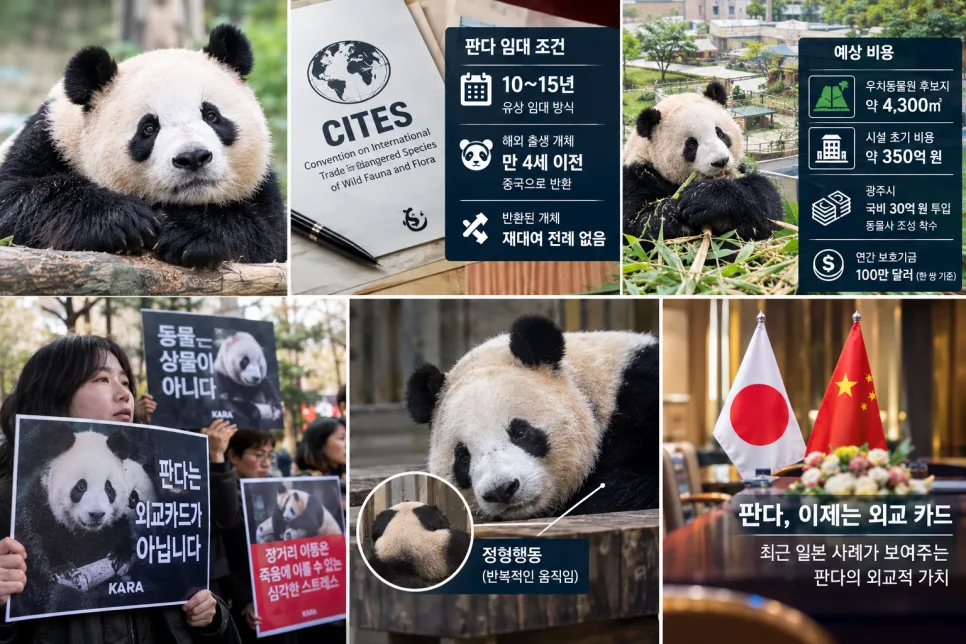
Under CITES, China only sends pandas abroad through paid loan agreements lasting 10 to 15 years.
There is also an understanding that pandas born overseas are returned to China before they turn four.
Most importantly, there has never been a precedent for a returned panda to be loaned overseas again.
The cost is also enormous.
The proposed Uchi Zoo site covers about 4,300 square meters, and the initial facility cost alone is estimated at about $25,480,000.
The city of Gwangju has already committed about $2,184,000 in national funding to begin building the animal facility.
On top of that, there is a separate annual conservation fee of $1 million per pair.
And the opposition is very real.
Thirteen groups, including KARA, said long-distance transport can cause “severe stress that may lead to death.”
They point to the stereotypic behavior Fu Bao showed after her return as part of the evidence.
And if anyone still doubts that pandas are used as diplomatic assets, recent developments in Japan make that point pretty clearly.
5. The family left behind—and another goodbye already on the horizon
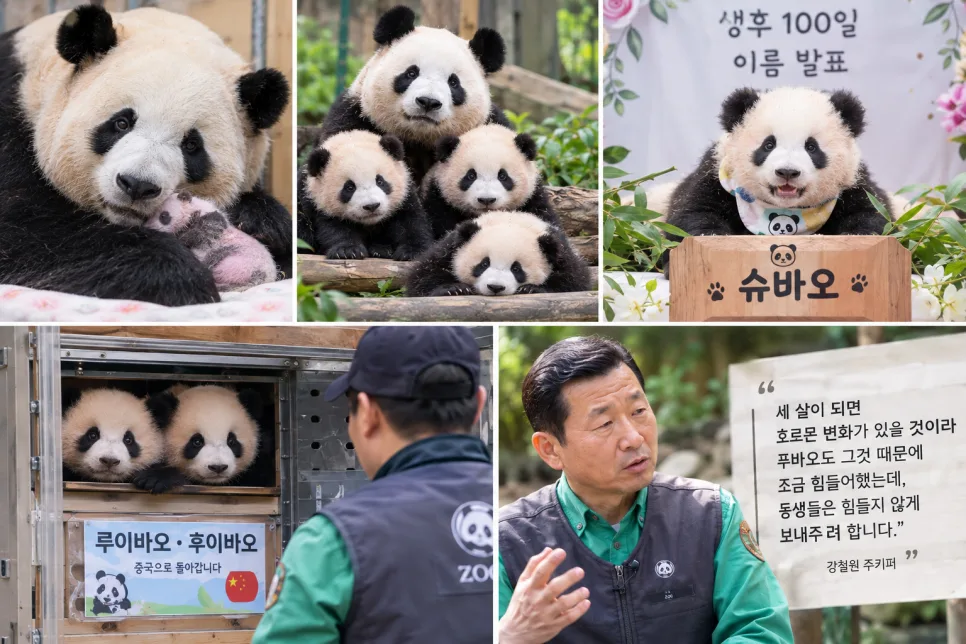
South Korea’s panda family has now grown to five.
At 10:53 a.m. on June 3, 2026, Ai Bao gave birth to her third cub.
Starting with this third birth, the additional conservation fund surcharge has been waived.
That stands in sharp contrast to the first cub, which carried a $500,000 fee, and the second birth—the twins—which added $300,000.
On September 11, the cub’s name was revealed to mark her 100th day.
After a vote with 230,000 participants, the chosen name was Shubao.
It was the youngest cub’s first official public event.
But another farewell is already expected.
Rui Bao and Hui Bao are expected to return to China this winter.
Zookeeper Kang Cheol-won said, “Once they turn three, there will be hormonal changes. Fu Bao had a hard time because of that too, and we want to send her younger sisters off in a way that’s less stressful for them.”
In a way, the older sister’s experience is now reshaping the younger twins’ timeline.
If you found this Fu Bao update helpful, please add me, share this post, and pass it along.
|
#fubao #fubao update #fubao health #shenshuping base #wolong giant panda center #giant panda #panda loan #panda diplomacy #south korea china summit #gwangju uchi zoo #everland panda world #ai bao #le bao #rui bao #hui bao #shubao #kang cheol-won #panda conservation fund #cites #climate energy and environment ministry #national forestry and grassland administration #kara #animal welfare #endangered species #panda return #2026 panda issue #FuBao #Panda #KoreaChina |
Leave a Reply