
Health & Wellness
Brain Waste Builds Up While You Sleep? Inside MIT’s 0.05-Second Pink Noise Discovery
September 15, 2026 | About 5 min | Daegu, South Korea
|
Key Takeaways: In the MIT pink noise study, researchers played a 0.05-second burst of pink noise at the exact peak of slow brain waves in 14 adults during deep sleep, and the flow of cerebrospinal fluid that helps wash waste from the brain became noticeably stronger. The big takeaway wasn’t the sound itself, but the timing of the push. |

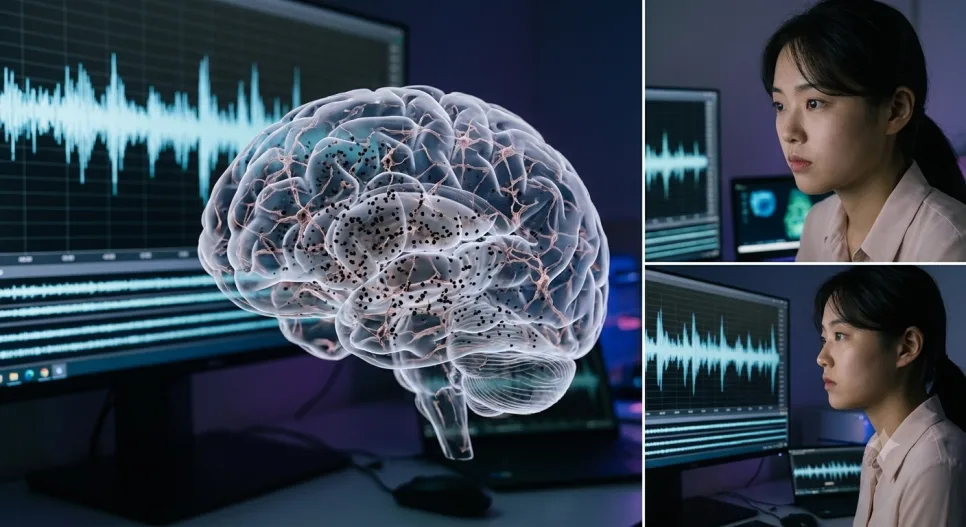
1. Your brain builds up waste over the course of a day
Your brain works nonstop the entire time you’re awake.
As a result, waste products like lactate and leftover proteins build up.
It’s basically the same idea as a factory producing byproducts after a full day of operation.
The real problem starts when that debris isn’t cleared out in time.
Signal transmission between brain cells can get disrupted, and inflammation can follow.
Over the long term, that may contribute to memory decline, reduced cognitive function, and degenerative brain diseases such as Alzheimer’s.
That’s why the brain sets aside its own cleanup window.
It happens during deep non-REM sleep.
At that stage, cerebrospinal fluid flow becomes more active and helps flush out toxins.
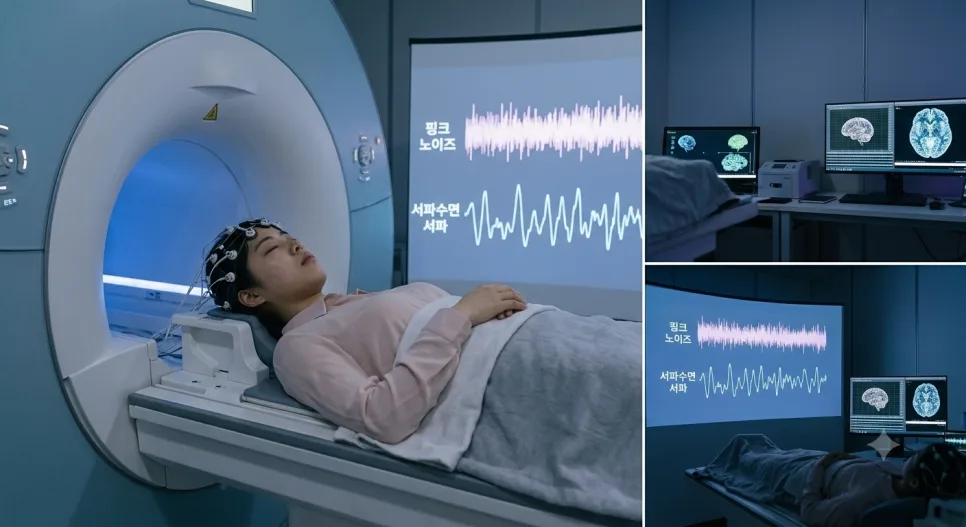
2. Not white noise, but pink noise
That brings us to pink noise.
It refers to sound in which intensity gradually decreases as frequency gets higher.
Rainfall, a gentle waterfall, and even a heartbeat are classic examples.
It’s different from the white noise most people talk about.
White noise has equal energy across all frequencies.
Pink noise, on the other hand, softens the higher-frequency edge, so it usually sounds much gentler to the ear.
That’s why so many people fall asleep to those 8-hour rain sound videos on YouTube.
In practice, they’re often listening to a form of pink noise.
But this MIT study tells a very different story from that familiar sleep routine.
3. They put 14 people to sleep and fired a 0.05-second sound
The researchers started with a simple question.
Could they influence sleeping brain waves in a way that makes cerebrospinal fluid move more forcefully?
Fourteen healthy adults took part in the experiment.
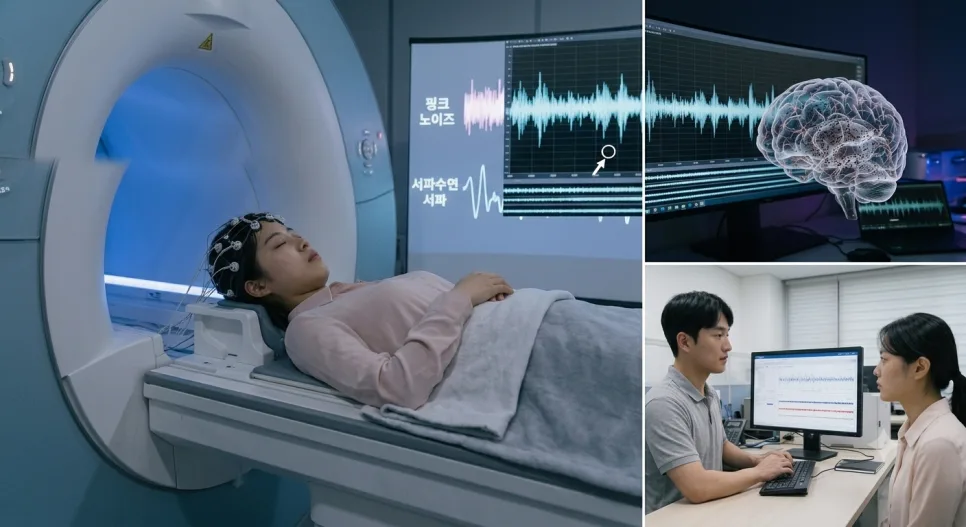
The participants fell asleep inside an fMRI scanner while their brain waves were measured at the same time with EEG.
The team tracked the peaks of slow waves in real time, the hallmark brain waves seen during deep sleep.
They handled the scanner’s background noise using a technique that filtered it out within 100 milliseconds.
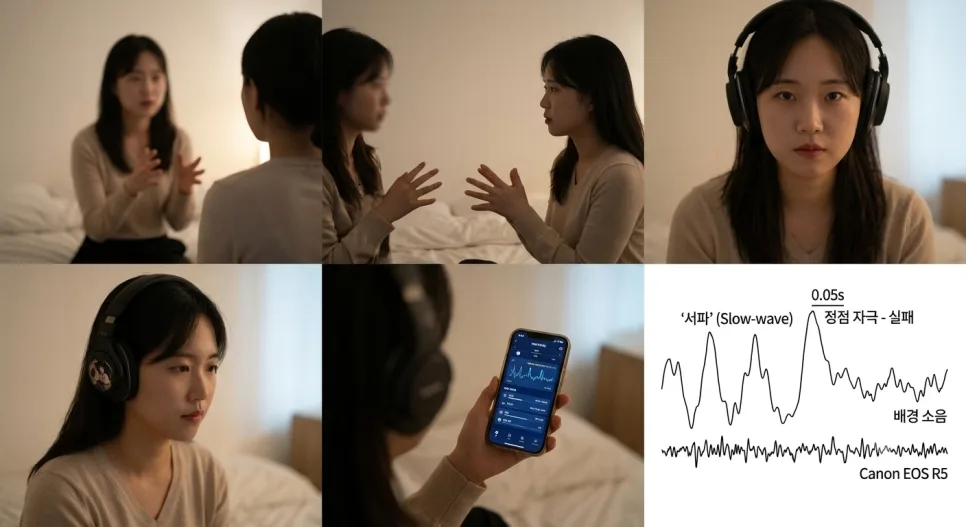
Then, at the exact moment a slow wave reached its peak, they played a 50-millisecond burst of pink noise.
That’s 0.05 seconds, less than one-sixth of a blink.
It was brief and gentle enough not to wake anyone up.
4. The surprising discovery: brain blood vessels acted like a pump
The results were clear.
About 0.25 to 0.75 seconds after the sound, the amplitude of the slow waves increased.
Then cerebrospinal fluid flow strengthened right along with them.
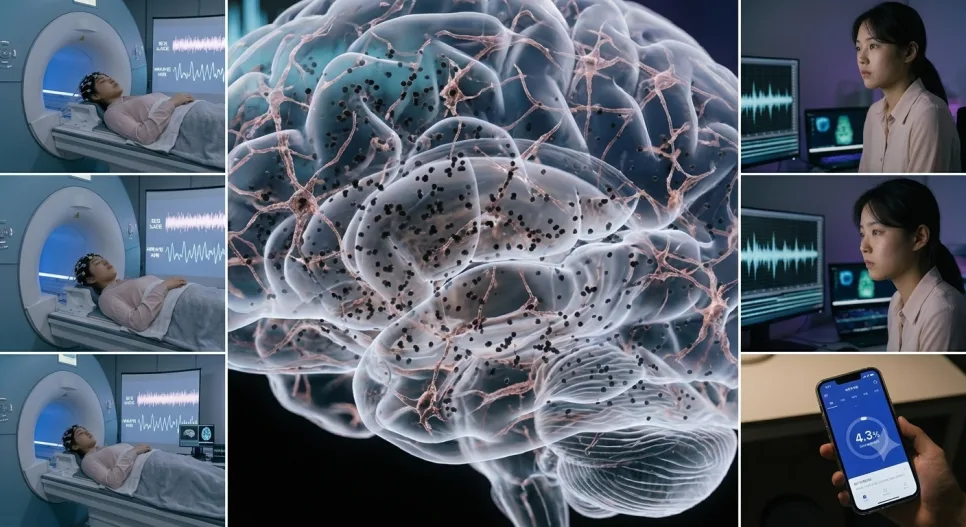
According to Korean media reports, the amount of cerebrospinal fluid entering the brain’s ventricles increased by an average of about 4.3%.
That number should be read with caution, since it reflects the average from a group of just 14 people.
The study was published in Science Translational Medicine on September 9, 2026.
What made it even more interesting is that the mechanism was confirmed on imaging.
The brain waves appeared to trigger contraction and expansion in cerebral blood vessels, and those vessels then pushed cerebrospinal fluid like a pump.
Senior author Professor Laura Lewis explained it like pushing someone on a swing at exactly the right moment so they go farther.
5. So should you play rain sounds tonight?
This is where an important misunderstanding needs to be cleared up.
The point of the MIT pink noise study is not simply that “pink noise is good.”
The real key was a 0.05-second sound timed to the peak of a slow wave.
If the timing is off, the sound is just background noise.
Playing it continuously for 6 or 8 hours is not the condition this experiment actually tested.
For infant sound machines, general guidance is to stay around 50 decibels or lower, so it’s worth checking both your volume level and speaker placement.
Current sleep apps and white noise machines on the market can’t read your brain waves.
The research team said they plan to develop a wearable EEG-based device using this principle, and first author Dr. Joshua Levitt mentioned the possibility of a home-use version in the future.
That said, it’s still not clear whether increased cerebrospinal fluid flow actually improves memory or changes the course of dementia.
Even so, the message from this research is pretty clear.
In humans, deep sleep slow waves themselves appear to function as a pump that helps wash the brain. The MIT pink noise study makes that idea much harder to ignore.
So before buying another gadget, the smarter first step is still creating the conditions for truly deep sleep. That may matter more than any MIT pink noise study headline suggests.
If you found this helpful, please share it and follow for more updates.
|
#pinknoise #pinknoiseforsleep #whitenoise #mitstudy #newyorkpost #lauralewis #joshualevitt #cerebrospinalfluid #brainwaste #glymphaticsystem #slowwaves #slowwavesleep #nonremsleep #deepsleep #sleepquality #insomnia #dementiaprevention #alzheimers #neurodegeneration #memorydecline #brainhealth #sleepresearch #sciencetranslationalmedicine #rainsoundsforsleep #sleepapps #wearables #eeg #PinkNoise #SleepScience |
Leave a Reply